

As we head into the summer months, we'd love to share some of the fascinating behaviours we've been observing in our honey bee colonies.
For seasoned beekeepers, many of these actions are part of everyday hive life. But if you're new to the world of bees, you may find yourself wondering, "What on earth are they doing?"
From synchronized dances to impressive cooling techniques, honey bees are constantly communicating and working together. Here's a closer look at some of the incredible behaviours happening right here in our apiaries in King City.
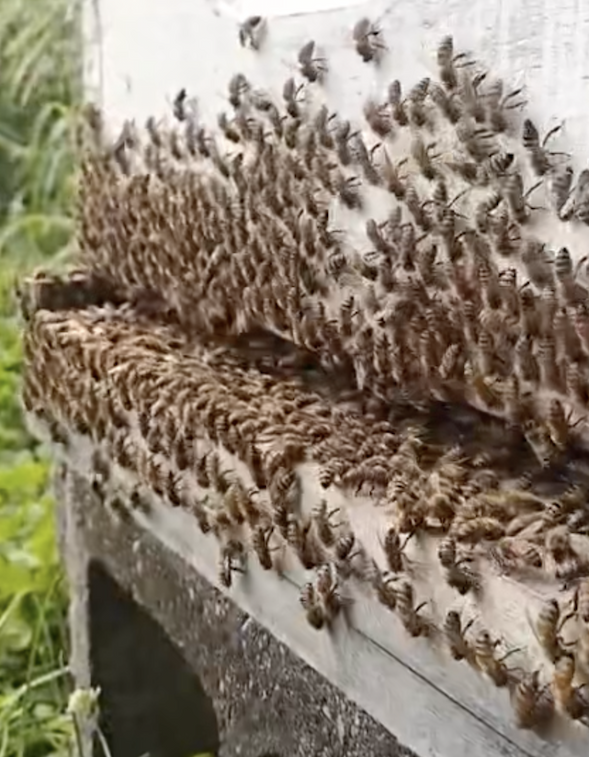
Washboarding
If you've ever watched the front of a hive and noticed hundreds of bees appearing to do a synchronized two-step dance, you've witnessed a behaviour known as washboarding.
Although scientists haven't determined the exact reason for this behaviour, several popular theories suggest that worker bees may be:
- Cleaning the hive entrance.
- Polishing the surface of the hive.
- Applying wax or propolis.
- Participating in a form of social organization within the colony.
What to Look For
- Bees moving back and forth in a rhythmic, synchronized motion across the front of the hive.
- Usually performed by worker bees that are approximately 13 to 25 days old.
- Most commonly observed between 8:00 a.m. and 2:00 p.m.
Fun Fact
Despite years of research, washboarding remains one of the greatest mysteries of honey bee behaviour. Even experienced beekeepers still enjoy watching and speculating about what the bees are really doing.
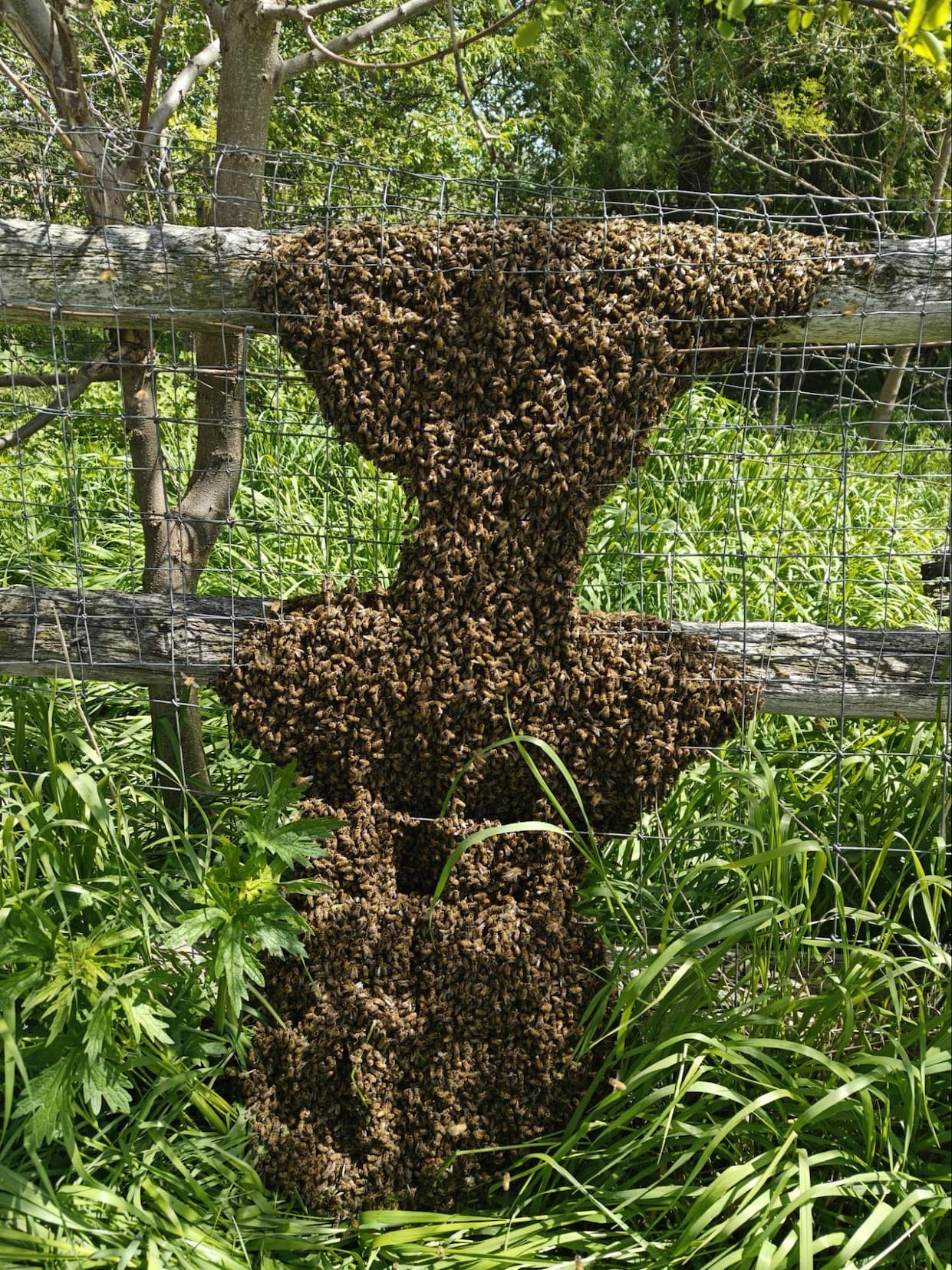
Swarming
Seeing thousands of bees flying through the air in what looks like a giant buzzing cloud can be startling, but don't panic—this is one of nature's most incredible events. This behaviour is called swarming, and it's how a healthy honey bee colony naturally reproduces.
When a colony becomes crowded, the existing queen leaves the hive with roughly half of the worker bees to establish a new home. Before settling into their permanent location, the swarm will often cluster together on a nearby tree branch, fence post, or other object while scout bees search for the perfect new nesting site.
Why They Do It
- Reproduce and create a new colony.
- Reduce overcrowding within the existing hive.
- Give a new queen the opportunity to take over the original colony.
What to Look For
- A large cloud of bees flying together.
- A temporary cluster of bees hanging from a tree branch, shrub, fence, or other structure.
- Scout bees leaving and returning to the cluster as they search for a permanent home.
- Swarms are most common in late spring and early summer when colonies are growing rapidly.
Fun Fact
Although a swarm may look intimidating, honey bees are usually at their gentlest during this time. Before leaving the hive, they fill up on honey for the journey, making them less defensive because they have no brood or honey stores to protect. If you happen to spot a swarm, the best thing to do is admire it from a safe distance and contact a local beekeeper (like us!), who can often safely relocate the bees to a new home.
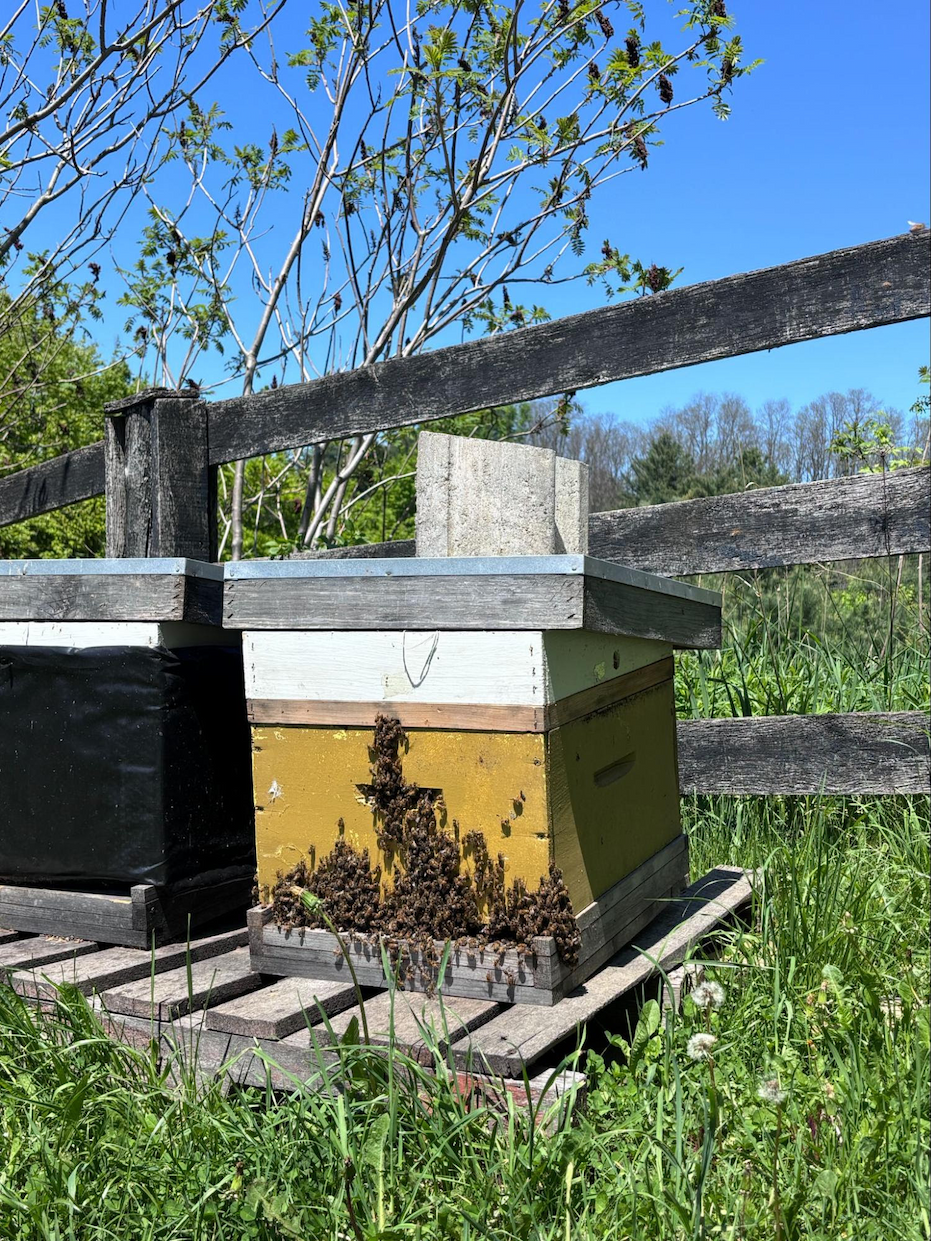
Bearding
On a hot summer day, you may notice thousands of bees gathering on the outside of the hive, creating what looks like a thick beard hanging from the entrance. This behaviour is called bearding.
Rather than indicating a problem, bearding is actually a clever way for bees to regulate the temperature inside the hive. By moving outside, they create more space for air circulation while maintaining the precise temperature and humidity needed for developing brood and for ripening nectar into honey.
What to Look For
- A large cluster of calm bees hanging from the front of the hive.
- Bees gathered on or around the landing board.
- Often accompanied by other bees fanning at the entrance.
- Most common during hot, humid weather.
Fun Fact
A bearded hive can look alarming to someone unfamiliar with bees, but it's usually a sign that the colony is working together to stay cool—not preparing to swarm.
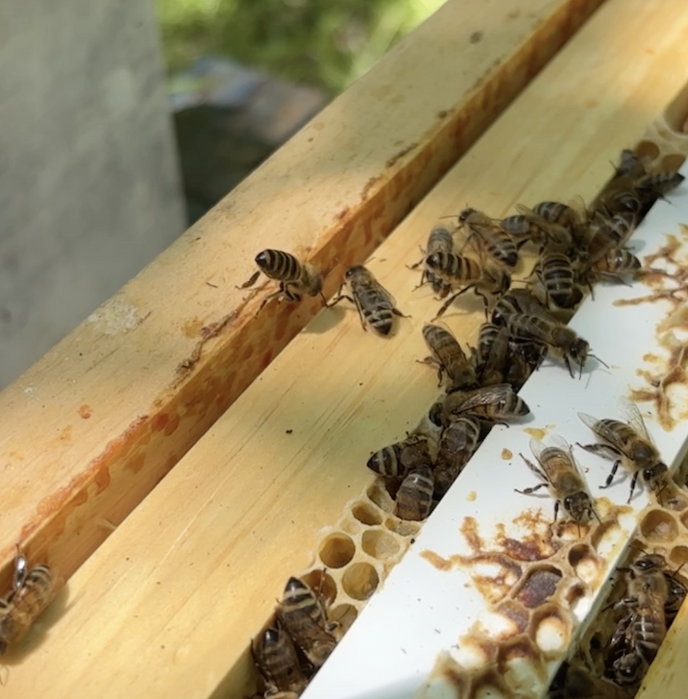
Fanning the Hive
When temperatures rise, another group of worker bees gets to work by standing at the hive entrance and rapidly beating their wings. This behaviour is known as fanning.
Their wings act like tiny fans, creating airflow that helps cool the colony while also reducing moisture inside the hive.
Why They Do It
- Cool the hive during hot Ontario summers.
- Evaporate moisture from nectar as it ripens into honey.
- Circulate important pheromones throughout the colony so bees can communicate effectively.
What to Look For
- Bees lined up at the entrance of the hive.
- Rapid wing movement while remaining in one place.
- Often seen alongside bearding during periods of high heat and humidity.
Fun Fact
One honey bee's wings don't move much air—but hundreds of bees fanning together create a remarkably effective natural air-conditioning system.
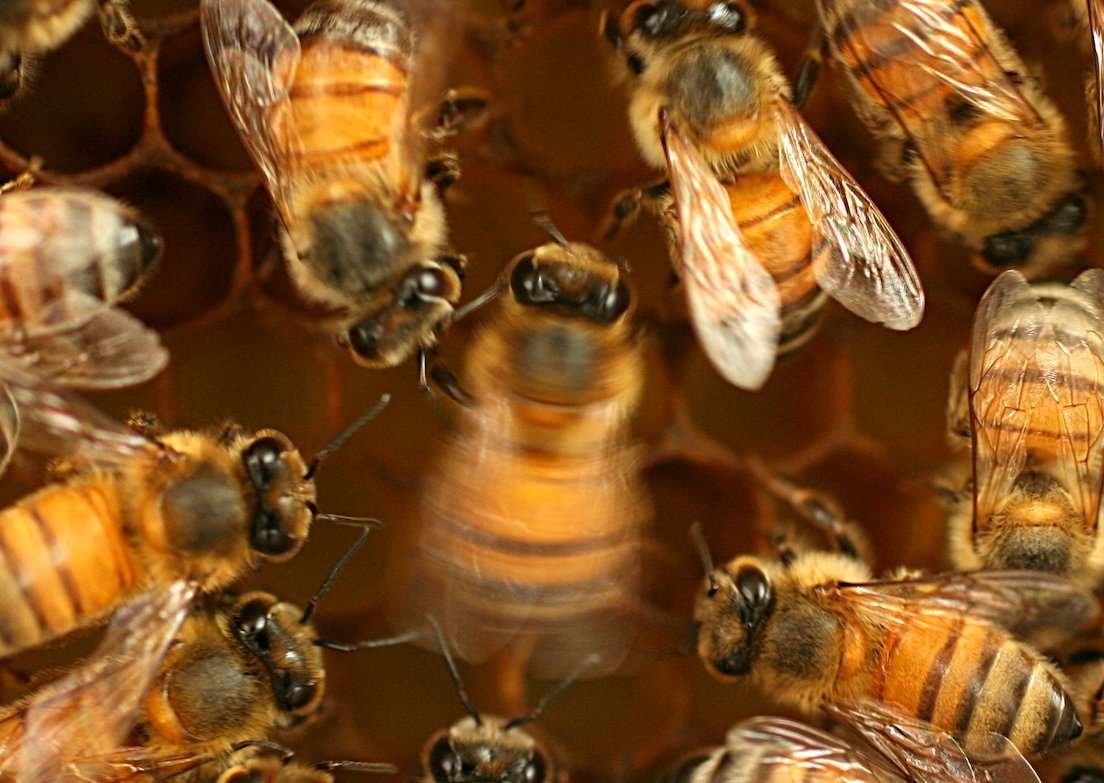
The Waggle Dance
Have you ever been so excited to tell your friends about an amazing restaurant or hidden gem that you could hardly contain yourself? Honey bees have their own version of that excitement—and it's called the waggle dance.
When a forager bee discovers an excellent source of nectar or pollen, she returns to the hive and performs a carefully choreographed dance that tells other foragers exactly where to find it.
This isn't just an excited celebration—it's one of the most sophisticated forms of communication found in the animal kingdom.
How It Works
The bee walks forward in a straight line while waggling her body, then circles back to repeat the movement.
- The length of the "waggle run" tells other bees approximately how far away the flowers are.
- The angle of the dance, relative to the sun, tells them which direction to fly.
Using this information, fellow foragers can locate the same nectar source with incredible accuracy.
Fun Fact
The waggle dance was one of the first examples proving that insects can communicate detailed information. It's so remarkable that scientists have studied it for over 75 years and continue learning more about this extraordinary language.
Every Movement Has a Purpose
One of the most remarkable things about honey bees is that very little they do is random. Every movement—whether they're fanning their wings, gathering outside the hive, performing a waggle dance, or mysteriously washboarding—is part of a highly organized colony working together toward a common goal.
The next time you spot bees buzzing through your garden or notice activity around a hive, take a moment to watch. You may witness one of these incredible behaviours unfolding right before your eyes. It's a wonderful reminder that even the smallest creatures have extraordinary stories to tell, and there's always something new to learn from the amazing world of honey bees.